
Follow Me Down the Glowy Vitamin C Hole
It won't make you young forever, but at least you'll look like you tried.

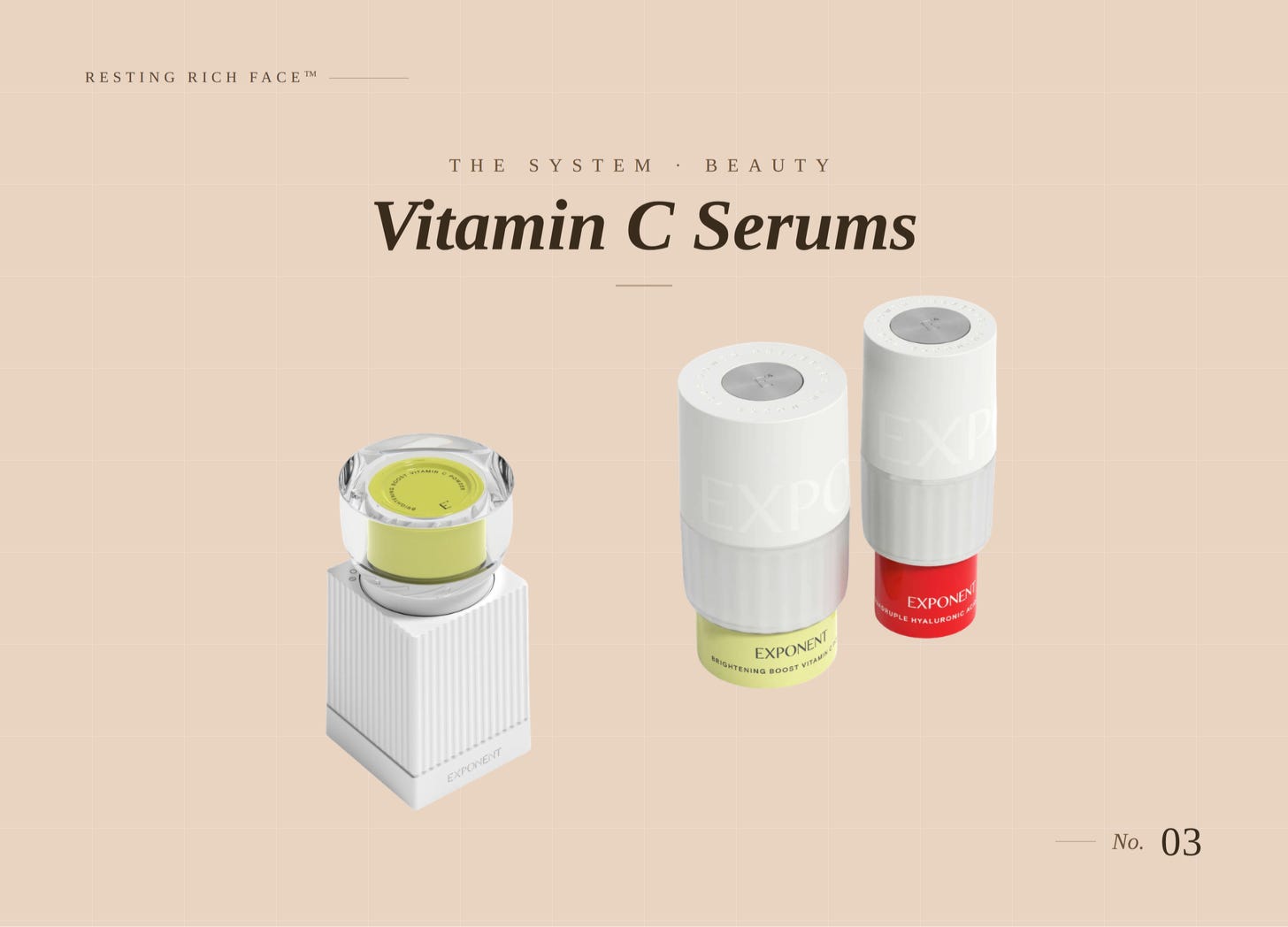
Let’s talk about the vitamin that costs $180 for half an ounce of something that used to just be your breakfast beverage.
Vitamin C is ascorbic acid. Your body can’t make it. Your skin needs it desperately. And the skincare industry has decided — correctly, irritatingly — that you should pay a lot for a good one. Here’s why.
L-ascorbic acid, the pure form, is notoriously unstable. It oxidizes. It degrades. It turns orange in the bottle — which is how you know it’s past its useful life, and yes, the opened one on your bathroom shelf is probably already dead. Keeping it potent, stable and effective enough to actually penetrate skin requires formulation complexity that costs real money: specialized packaging, pH-precise bases, antioxidant stabilizers like vitamin E and ferulic acid, manufacturing conditions that would make a hospital operating room feel casual.
Why it’s so underrated and not every beauty editor’s top recommendation is beyond me. But if everyone knew what I do, I wouldn’t have a job.
The expensive serums are expensive because the chemistry is genuinely hard — and because luxury skincare markup is a real and thriving industry. But here’s the thing: the chemistry doesn’t care what you paid. A well-formulated $24 serum will outperform a poorly formulated $200 one every single time. The goal is to know the difference. That’s what I’m here for.
